One Dunker Punk’s Thoughts On Protest

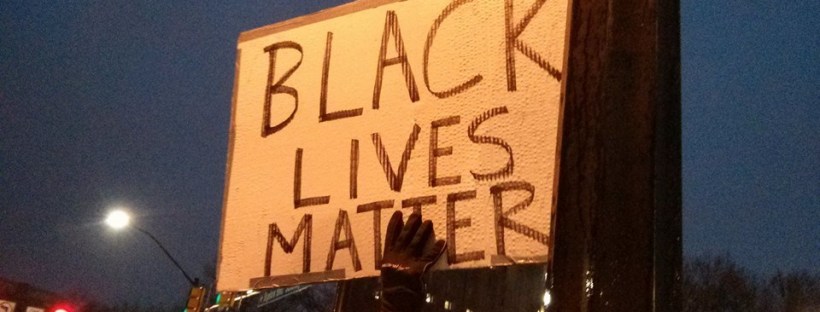
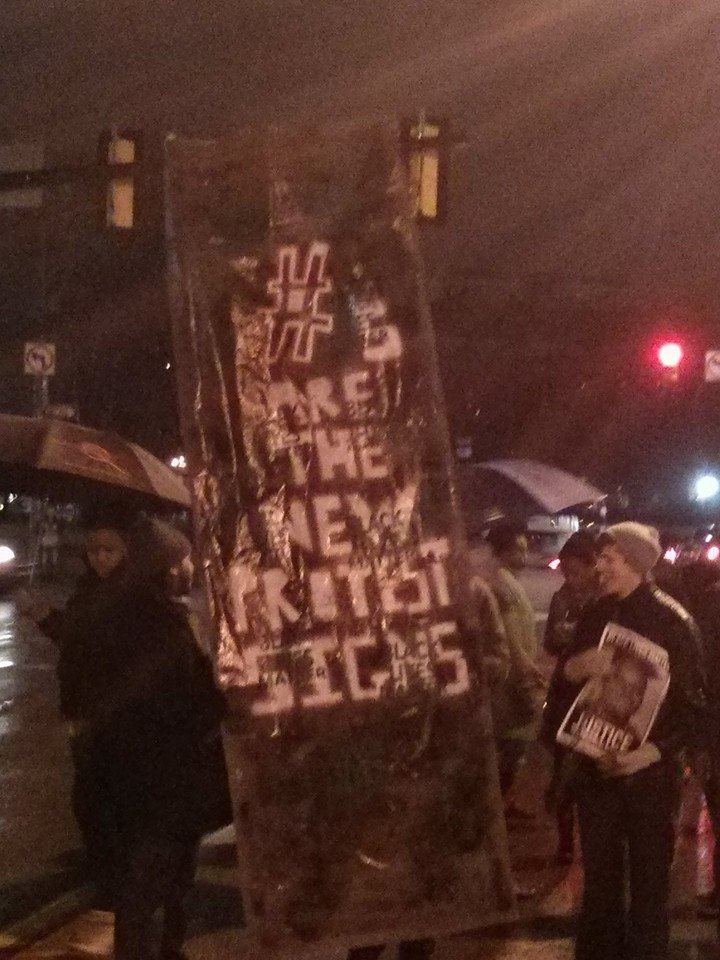
Last night, a crowd of 300-500 nonviolent protesters gathered in the cold rain in the Oakland neighborhood of Pittsburgh, to peacefully voice their anger, anguish, and fear after several recent high profile instances of police killing uprotest7narmed black men. The protest was organized by several Pittsburgh high school students, and it was attended by mostly high school and college students, with some adults. It was one of dozens of #ShutItDown protests taking place across the country: peaceful protesters gathering, rallying, and then marching down the street. I was one of the protesters, and I wanted to share my experiences and thoughts with all my Dunker Punks friends.

First, here’s how things went down for me:

I arrived at approximately 5:05 PM, about 5 minutes after the protest was scheduled to begin. The protest took place in a public area called Schenley Plaza. The people were packed around a series of speakers using a megaphone. By the time I got there, the crowd was too large to even see the people speaking, so I circled the crowd taking pictures.

At around 5:45, we began theprotest3 “Shut It Down” part of the protest. We made a loop around two city blocks, marching on the two major streets in this area of Pittsburgh, and chanting phrases like “Hands Up, Don’t Shoot” and “Black Lives Matter.” This took all of about 15 minutes, but it sent a powerful message, and onlookers joined the crowd as we continued to march.

When we returned to Schenley Plaza, we made a circle in the intersection. The organizers stood in the middle of the circle, and led us in a few chants. After the organizers left the circle, the protesters joined in an impromptu “die in,” where they laid on the ground for a few minutes in the intersection. The organizers came back, and asked the crowd to peacefully disperse. We had made our point, and it was time to be cooperative and respectful, especially since the people of Pittsburgh and the police had been cooperative and respectful to us.

At this point, I left, which leads me to my thoughts: 

First of all, this was an entirely student led protest. It was organized by a group of high school students. They saw something wrong with the world, and they decided to do something about it. That’s Dunker Punk level leadership, and it’s also a Dunker Punks challenge. If you think you’re too young to make a difference or take leadership, look at all the amazing young people across the world who are doing just that.

I also want to make it clear that the Pittsburgh Police were exemplary in this protest, protest13and they deserve a lot of credit for the actions they took. Though the police responded to the situation, they did so in a calm, measured, and respectful way. It became immediately clear to me that they were concerned with protecting our safety and our right to protest, rather than with clearing the protest so that the city could return to its business. The police cleared the streets and stopped traffic so that we wouldn’t be in danger of oncoming cars.

These protests are not to say that all police are bad. We know that all police aren’t bad, and everyone at this protest saw it first hand. These protests are to say that there are bad police who use bad tactics, tactics that are far too forceful, and tactics that have very clear racial bias to them. These protests are to say that there is a system in place that protects the bad police, rather than encouraging all police to be like the good ones. These protests are to say that the system acts as if black lives do not matter. These protests are to say that there are people in this country who feel afraid and demonized by the people who are supposed to protect and serve them. These protests are to say that the black community is deeply hurting at the loss of its loved ones. And that’s why I joined the protest. I’ve never felt afraid or untrusting of the police. I’ve never been hurt by the police. And I think everyone deserves to live in a world where they can feel that way. If I was a good police officer, I would feel outraged at the bad police officers who are tarnishing my efforts and commitment to protect people and make them feel safe.

And that takes me to some of the negatives that I saw in the protest:

First: the crowd was very exprotest12cited, and it was getting a lot of positive energy from the people speaking. Until this one guy took the megaphone. Whereas every other speaker was a black man or woman (they were mostly women), this guy was a white man. That isn’t necessarily a bad thing (I’ll get to that in a moment), but his message was bad. He took this opportunity in front of hundreds of people to promote his own political organization. He talked at length about what his organization does and when and where they meet. You could feel the crowd deflating. In terms of energy, it was the low point of the night.
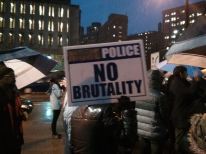
Second: There are chants that I think are productive, and there are chants that I think are counterintuitive. I like chants like “Hands Up, Don’t Shoot” and “I Can’t Breath” and “Black Lives Matter” and “Shut It Down.” These chants are all peaceful and nonviolent. They call attention to injustice, while elevating the conversation to a higher standard. I don’t like chants like “No Justice, No Peace” or chants about individual racist police officers or chants that use profanity. These chants still highlight the injustice, but they make it hard for the protesters to separate themselves from the injustice that they are protesting.

Saprotest8ying “no justice, no peace” is to say, “I have been treated wrongly, so I will respond with wrongdoing.” It’s a promise, or at least an invitation, to violence. And it’s not what is needed. Talking about individual racist police officers makes the conversation about vindication and vengeance, rather than about seeking to dissolve injustice. There is absolutely a big racial bias in our justice system, and the presence of racism needs to be addressed. But making it about individual racist police diminishes the problem and represents only a narrow conception of justice. I’m not offended when I hear profanity, but using profanity allows critics of these protests to make it about the language that the protesters are using, rather than the change they are seeking. Don’t give critics that ammo. Use language that is becoming of the change you wish to enact.

Nonviolent protest is effective because it draws a contrast between the victims and the perpetrators. It highlights the depravity of violence and injustice. It showcases the suffering caused by oppression. If your protest against injustice comes with the promise of acts of violence, or even the suggestion that that is acceptable, you are defeating yourself.

Finally, the protest continued after I left. I’m not against a long-winded protest, but I do think it was wrong in this case to continue, only because the organizers of the protest had asked the crowd to disperse or at least return to the sidewalk. As I was walking away, I turned around to see the protesters again heading down the street, except this time it was a much smaller, much whiter crowd. It’s easy to get caught up in the excitement of a protest, and that’s ok, but I do think protests should remain respectful to their organizers. The students who marched down the street a second time effectively demonstrated that they did not respect the leadership of the organizers. They hijacked the protest for their own reasons. But I want to be clear that my objection to this second protest was not because of the disruption it caused to traffic, but because it was outside the scope and leadership of the protest, and I’ll explain why shortly.

This brings me to my last section, tips for Dunker Punks if you want to join a protest: 

Tip #1: Listen to the organizers, and respect their leadership. Chances are, your protest will be organized by black men and women, and chances are, if you’re a Dunker Punk, you are probably white. Not all Dunker Punks are white. We’re a diverse group, but in general the Churcprotest17h of the Brethren in the United States is a very white denomination. This is something we should fix, but it’s also just a true statement for the purposes of this article.

If you’re white, you’re more than welcome to get involved and protest. I’m white. It’s important that Dunker Punks care about these issues. But if you’re white, you have to take extra care to take a supportive and not leading role in protests like these that have racial motivations. It’s great that you want to get involved and make a difference, but if you become so dominant that you are usurping control of the situation, you are in effect reinforcing the influence of white supremacy in our society. White people aren’t supreme, but they have been raised in an environment that encourages them to take control of situations and be leaders. In this case, take care to be a follower, and if you see other white people doing this, say something to them. They probably don’t realize that their good intentions are being expressed in the wrong way. Remember that I said that the second protest was predominantly white, whereas the first was predominantly black. And remember that white guy who took the megaphone and promoted his own organization and cause. If you’re white, support, be empathetic, take leadership when it is appropriate, but don’t usurp leadership from black organizers.

Additionally, listening to the organizers is the best way to ensure that the protest stays under control. If the protest gets out of control, that when it can get violent or destructive.
protest4Tip #2: Research the protest beforehand. As Dunker Punks, we should feel compelled to make a difference in the things that matter to us, but we must also be sure that we are using the proper, Christlike channels. Our motivation is not simply to seek out change, but to seek out change that looks like Jesus, in ways that look like Jesus. Please research to make sure the organizers of your protest are clear about keeping this nonviolent. In my case, the organizers were clear in inviting others to the protest that it was strictly nonviolent, and no violence would be tolerated.

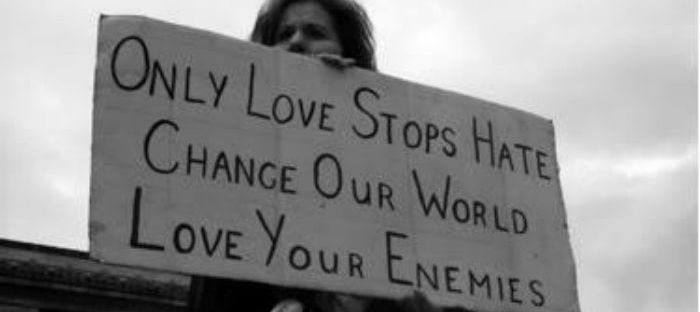
Tip #3: Look like Jesus at the protest. If your protest is large enough, there will be people who believe in using violent measures to get what they want. There are always extremists. But we aren’t extremists, we’re radicals. And as radical Christians, we must look at the roots of our faith, where we see Jesus, who very clearly condemns violence, especially in response to injustice. Follow Jesus at your protests, don’t chant “No Justice, No Peace.” More importantly, don’t believe it. Don’t incite violence, and stop violence if you see it happening. Be peaceful, be nonviolent, but never keep your eye off the goal of stopping injustice. That’s how we enact cross-shaped change.

How are you making the world look more like Jesus? Use #DunkerPunksCare, or fill out a Dunker Punks profile!

Emmett Eldred - Hollidaysburg COB, Middle PA DistrictEmmett Eldred is a sophomore Creative Writing; Professional Writing; and Ethics, History, and Public Policy Major at Carnegie Mellon University. His passions include reading about, writing about, and snuggling with pugs. Emmett is the founder of DunkerPunks.com, and he wants lots more people to contribute! Fill out a Dunker Punks profile, and join the conversation! Follow Emmett on twitter @emmetteldred and follow Dunker Punks on Twitter @DunkerPunks and on Facebook.

COB Youth Start Dunker Punks Cafe

It’s Sunday morning. You’ve indulged in the snooze button one too many times. You’re running late for church, and now you have two options. Option 1: skip your coffee run and risk falling asleep during the morning prayer. Option 2: stop for coffee, show up late, and take the walk of shame to the only open seats, which are of course in the front row.

That is, unless you go to Beacon Heights Church of the Brethren in Ft. Wayne, IN.

The Dunker Punks at Beacon Heights have started a “Dunker Punks Cafe,” to serve church members free coffee before Sunday school. It’s a simple operation, just coffee and a few other hot beverages served from a window between the church kitchen and fellowship hall. But like the best things Dunker Punk, it’s a small act that’s going a long way.

The other day, I spoke with Beacon Heights youth leader Megan Sutton and learned more about the Dunker Punks Cafe. I was excited and amazed to hear about the impact that this ministry is already having in the congregation and in the local community. But perhaps the biggest impact is on the Dunker Punks themselves.

The impact that this ministry has within the church is pretty straightforward. “It’s a way for our youth to connect with the congregation,” Megan said. The Dunker Punks at Beacon Heights know that the best way to connect with others is to serve them. That’s what Jesus always did.

Service at the cafe is completely free, but congregation members are encouraged to give a freewill donation. Every few months, the Dunker Punks will take the donations that they’ve collected and give them to a local charity organization. Even selecting which charities to give to is a chance for the Beacon Heights Dunker Punks to grow as followers of Jesus. According to Megan, they take the time to research every charity that they consider, trying to find links between the service that that organization provides and Jesus’ teachings.

This process isn’t just to find the best use of the Dunker Punks’ hard earned money. It’s also a chance for them to find other opportunities to go out and serve the community. After they’ve found a charity that they like, the Dunker Punks at Beacon Heights are encouraged to volunteer.

Though the Dunker Punks Cafe was only launched in September, it’s already been a huge success. Megan has been especially happy at how every member of the Beacon Heights youth group has been able to find their own niche in the project. “Our youth group is pretty small, but we have a very diverse group in terms of age.” Megan told me, “We wanted to find a project that youth of various ages and maturity levels could come together and enjoy.”

For that to happen, Megan said that they needed to think outside the box. “Before NYC, we already knew that we wanted to make a change, but we were thinking something along the lines of a new curriculum or resources or teacher. Inside the box thinking.” After NYC and the beginning of the Dunker Punks movement, the Beacon Heights youth began to realize that they needed an active, service oriented ministry. They returned from NYC jazzed up, excited, and ready to think outside the box.

“NYC provided a lot of fuel,” said Megan. She worked with her youth to develop the idea for the Dunker Punks Cafe, and she continues to provide support, but it is their ministry. “They run it. They have taken off with it,” she said. They are learning as they go. Not just about running a successful ministry, but about following Jesus and putting his teachings into practice by serving like Jesus.

Putting the Dunk In Dunker Punk

Putting the Dunk In Dunker Punk

I asked Megan how she thinks this project relates to the Dunker Punks movement. It “equips them to be leaders.” she said, “Rather than just talking about making a difference, they are going out and actually doing it.”

A big part of the Dunker Punks movement is about youth discovering that they can make an impact. Megan believes that her youth are learning exactly that. She said she wants the Beacon Heights Dunker Punks to reflect on the impact that they’re having and wonder, “What can they do when they are older and have more resources?” Then, she corrected herself, “In fact, what broader impact can they have right now? They are experiencing that they can do it.”

The theme of NYC was “Called by Christ, Blessed for the Journey Together.” This goes back to what Megan said about each of the Beacon Heights Dunker Punks finding a niche in the project. She said that they are all “finding and exploring a calling.” Each is taking action and doing something that they enjoy, all while serving the congregation and community. If they haven’t found the part of the project that they enjoy yet, they will. They’ll think outside of the box. They’ll get creative. They’ll get radical. It’s what Dunker Punks do. “It’s really cool to watch,” said Megan.


EmmeEmmett Eldred - Hollidaysburg COB, Middle PA Districttt Eldred is a sophomore Creative Writing; Professional Writing; and Ethics, History, and Public Policy Major at Carnegie Mellon University. His passions include reading about, writing about, and snuggling with pugs. Emmett is the founder of DunkerPunks.com, and he wants lots more people to contribute! Fill out a Dunker Punks profile, and join the conversation! Follow Emmett on twitter @emmetteldred and follow Dunker Punks on Twitter @DunkerPunks and on Facebook.

Breaking it Down: The Sermon on the Mount Part 6

By Jenna Walmer

“You have heard that it was said, ‘Eye for eye, and tooth for tooth.’ But I tell you, do not resist an evil person. If anyone slaps you on the right cheek, turn to them the other cheek also. And if anyone wants to sue you and take your shirt, hand over your coat as well. If anyone forces you to go one mile, go with them two miles.  Give to the one who asks you, and do not turn away from the one who wants to borrow from you. “You have heard that it was said, ‘Love your neighbor and hate your enemy.’ But I tell you, love your enemies and pray for those who persecute you, that you may be children of your Father in heaven. He causes his sun to rise on the evil and the good, and sends rain on the righteous and the unrighteous. If you love those who love you, what reward will you get? Are not even the tax collectors doing that? And if you greet only your own people, what are you doing more than others? Do not even pagans do that? Be perfect, therefore, as your heavenly Father is perfect.” – Matthew 5: 38-48

As I have noted, the last few blog posts have been more difficult to discuss for varying reasons. However, we have finally reached loving your enemies and completed chapter 5!

This section is easier to fathom for the Brethren because we have grown with this teaching instilled in our mind. Although it may be hard to pray for those who hate you, we more naturally love everyone and reject the idea of “getting even” with someone. So when we are wronged we forgive others.

By telling us to not retaliate, we are kept from taking the law into our own hands. We overcome evil with good by praying and loving those who hate us. If you love the people who treat you unjustly, it truly shows that the Lord is the center of your life. Loving those who wrong us is capable through God’s unconditional love and his strength that is given to us. Also, he gives us humbleness and selflessness. He provides the courage and strength to show love to those who do not give it in return.

Think of the one person that came to mind during the Sermon of the Mount Part 4 post on anger. In this blog post, I addressed how anger means there is a broken relationship with God. It also applies when you do not love everyone, also addressed in that post. This time, think of the people who are directly vile to you, not just the ones who you don’t like just because they are unjust to others. All of the people you are called to love because THEY ARE PEOPLE, just like yourself. As we are told in multiple places in the Bible, love others as yourself and to everyone be kind. I also think they are song lyrics.

We are Dunker Punks. One of the main ideas is to radically love. If we start being just to others and enhance our loving capacity, how would that shape the world? Would the wars dwindle? Would the innocent civilians, men, women and children, dying around the world, decrease? Would more people start acting like us? Will we one day be able to stand hand in hand and sing Kumbaya? That last one is kind of a stretch, but that’s the gist of the idea, is it not?

We are called to love boldly: To step out in faith and show those who don’t believe, believe in and hope for peace and unconditional love. To advocate and work for those who are desperate for a safe place to live because of violence. Start a revolution in your area of loving everyone and maybe it will go worldwide.


Jenna Walmer - Palmyra COB, Altantic Northeast DistrictJenna Walmer is from Lancaster County and is currently in 12th grade. In school, she loves to research historical events. If she were to live in a specific time period, she would want to be a hippie and live in the 60s or 70s. Her favorite past times are swimming and playing her trombone. If you want to know more about her random life, follow her on twitter: @jaymarie2100

Want to contribute? Fill out a Dunker Punks profile, and/or email dunkerpunks2014@gmail.com.

Today is the Day! Make your profile!

wanted_poster-page-001

What is a Dunker Punk?

A Dunker Punk is a young, counter-cultural, radical follower of Jesus. Someone who is willing to say “Jesus is Lord.” Someone who is obedient in following Jesus’ teachings. Someone who is committed to learning and praying. Someone who is passionate about bringing Jesus’ love to the world through nonviolence, kindness, and service.

If that sounds like you, we want you to join the movement! Fill out the survey below. Just two simple questions: “How are you following Jesus?” And “How can other Dunker Punks help?”

Dunker Punks Profile Drive!

profile_drive

Help DunkerPunks.com connect with every youth from NYC!

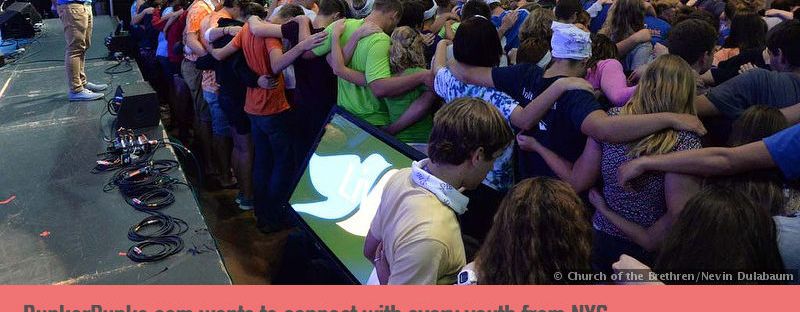
At NYC, hundreds of youth participants stepped forward and made a commitment to be Dunker Punks by living and loving like Jesus. DunkerPunks.com hopes that each of these youth will fill out a simple “Dunker Punk Profile” about simple yet radical ways that that are following Jesus.

Click here to make your profile!

DunkerPunks.com is a youth owned and operated website supported by On Earth Peace and the Church of the Brethren. The goal of DunkerPunks.com is to connect with youth in the Church of the Brethren, give them a platform to communicate their beliefs, experiences, spiritual needs, and actions, and help them inspire and support one another.

What is a Dunker Punk?

A Dunker Punk is a young person who is a member of a rebellious countercultural tradition that radically commits their life to living God’s Calvary-shaped love in the power of the Spirit, to the glory of the Father. “Dunker” refers to our spiritual heritage and baptizing tradition, and “Punk” refers to our young, radical, counter-cultural, and rebellious nature.

We practice simple spiritual discipline by praying the Lord’s Prayer and studying Jesus’ teachings. We follow Jesus through simple, radical action in our personal lives, in our communities, and on a global scale.

Why fill out a profile?

Dunker Punks can express how they are following Jesus. They can share their thoughts, beliefs, hopes, and actions. They can learn from each other and lead one another.

All it takes is two simple questions: “How are you radically following Jesus?” and “How can other Dunker Punks help?” Remember, radical doesn’t have to mean big. Small steps like loving our enemies or reading the Sermon on the Mount are radical and countercultural.

Click here to make your profile!

Encourage NYC youth in your family, congregation, and district to make a profile.

DunkerPunks.com hopes that every youth from NYC gets to make a profile, and we need your help to make that happen.

Jesus is Not the Secretary of Afterlife Affairs

A few weeks ago, I attended a conference about anabaptism and church mission. This is third installment in blog posts responding to the main presenters. Today, I’m responding to Brian Zahnd. Brian is the pastor of the Word of Life Church in Missouri. He is also a speaker and the author of “A Farewell to Mars.”

One of Brian’s favorite ways to talk about Jesus is to say, “Jesus is not the Secretary of Afterlife Affairs.” By this, he means “Jesus is our Lord, now, on Earth.”

Not, Jesus will be our Lord when we go to heaven.
Not, Jesus’ is in charge, but his jurisdiction is heaven.
Not, Jesus is Vice-Lord.
Not, Jesus is Lord-elect.
Not, Jesus is my ticket for getting into heaven.

But, Jesus is Lord, right here, right now.
His Kingdom is on Earth.
Which means I’m in his Kingdom.
So I should live like I’m part of his kingdom.

Most Christians don’t bat an eye at the concept of “Jesus is Lord.” It’s standard terminology in the Christian Church. So much so that we’ve become very desensitized to its implications.

Imagine that you are a member of the very early church. This means that you live in the Roman Empire. In the Roman Empire, there was only one lord. The Caesar. The Emperor. No Lord but Caesar. So to say “Jesus is Lord.” Was to commit treason.

To say “Jesus is Lord” was to say “Caesar is not.”

No wonder so many early Christians were killed. And no wonder Jesus was crucified, a form of execution reserved for acts of political sedition.

We don’t have that vocabulary anymore, and we don’t live in that political reality anymore, so we have lost the radical implications of saying that Jesus is Lord.

It is our job as Dunker Punks to acknowledge and reclaim the radical implications. Being a Dunker Punk is to be countercultural. Being a Dunker Punk is to be nonconformist. Being a Dunker Punk is to be a radical follower of Jesus.

Here’s the problem:

The Church in the United States is very nationalistic. We love to call the United States a “Christian nation.” This is dangerous because it gives the United States the appearance of wielding the power and authority of Christ, while relegating the actual Jesus to the sidelines.

One of my favorite quotes is by the author, theologian, and activist Jim Wallis: “Mixing the Church with politics is like mixing ice cream with manure. It doesn’t do much to the manure, but it really messes up the ice cream.” Any time the Church becomes part of the power structure, as it has in the United States, it betrays its heritage as a subversive institution that challenges the powerful and stands up for the powerless.

This is the culture that we have to counter. This is what we can’t conform to. Whereas the Church in the United States wants to confine Jesus’ love and power to the borders of the United States, Dunker Punks understand that Jesus loves everybody, and we have to do the same.

The borders of Christ’s kingdom don’t end at the Atlantic or the Pacific or the Rio Grande, so our love can’t either. Christ on the cross reveals a God who would rather die than kill. By following Jesus, “love your neighbor as yourself” and “love your enemies” are the pillars of our foreign policy. And feeding the hungry, healing the sick, clothing the poor, and standing with the imprisoned are the pillars of our domestic policy. And the terms “foreign” and “domestic” are irrelevant because we are all children of God.

Jesus on the cross should prove to us that a different organization of society is possible. Dunker Punks must be leaders in following Jesus. We are living in Christ’s kingdom, and we have to act like it.

That starts with us saying “Jesus is Lord,” and accepting the radical implications.


Emmett Eldred - Hollidaysburg COB, Middle PA District

Emmett Eldred is a sophomore Creative Writing; Professional Writing; and Ethics, History, and Public Policy Major at Carnegie Mellon University. His passions include reading about, writing about, and snuggling with pugs. Emmett is the founder of DunkerPunks.com, and he wants lots more people to contribute! Fill out a Dunker Punks profile, and join the conversation! Follow Emmett on twitter @emmetteldred and follow Dunker Punks on Twitter @DunkerPunks and on Facebook.
Want to contribute? Fill out a Dunker Punks profile, and/or email Emmett at dunkerpunks2014@gmail.com.

What Dunker Punks can learn from Malala

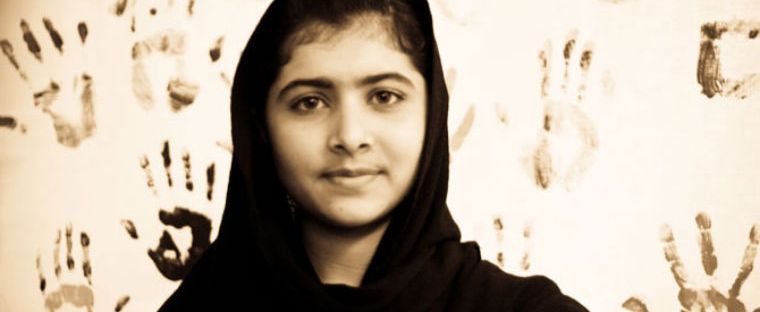
Today, the Nobel Peace Prize was awarded to Malala Yousafzai and Kailash Satyarthi for their work in standing up for the rights of children and young people, especially for their right to education.

Malala Yousafzai is the youngest person to ever win the Nobel Prize. She was in Chemistry class when she learned that she had won.

What does this mean for Dunker Punks? Well, I’m sorry to tell you, it doesn’t mean that being a Dunker Punk will get you the Nobel Prize. But here’s what it does mean: We live in a world that is paying attention. We live in a denomination that is paying attention. We go to churches that are paying attention. At least they should be.

Knowing that we live in a world where a 17 year old Pakistani girl can win the Nobel Prize encourages me that I have a right to speak up and put my beliefs into practice. And I want to speak up and say that you have that right, too. In the Church of the Brethren we recognize something called the “Priesthood of All Believers.” And yes, that even includes youth. How Dunker Punk is that? It’s pretty counter cultural, and its pretty radical.

And I would argue that it’s not just a right, but a responsibility.

In her statement after learning that she had won the Prize, Malala said that children around the world should stand up for their rights and not wait for someone else. In the United States, not many of us have our basic human rights violated. We have access to clear water and fresh air, shelter and food, health and safety, education and opportunity. But there are people in our communities and across the world who do not have these things.

Jesus advocated for a world that cares for one another, that stands up for each other’s rights. On earth as it is in heaven.

For Dunker Punks, Malala’s words and Jesus’ teachings mean that we have to stand up for others’ rights and not wait for someone else to do it. So don’t. But remember, we don’t have to do something worthy of the Nobel prize. All we have to do is listen to Jesus in the Sermon on the Mount, talk to Jesus with the Lord’s prayer, and listen when Jesus inspires our creativity.

Fill out a Dunker Punks profile, and tell the Dunker Punks community what you are doing to follow Jesus and practice his love. Email me, and let me know how I can help you speak out and stand up.


Emmett Eldred - Hollidaysburg COB, Middle PA District

Emmett Eldred is a sophomore Creative Writing; Professional Writing; and Ethics, History, and Public Policy Major at Carnegie Mellon University. His passions include reading about, writing about, and snuggling with pugs. Emmett is the founder of DunkerPunks.com, and he wants lots more people to contribute! Fill out a Dunker Punks profile, and join the conversation! Follow Emmett on twitter @emmetteldred and follow Dunker Punks on Twitter @DunkerPunks and on Facebook.
Want to contribute? Fill out a Dunker Punks profile, and/or email Emmett at dunkerpunks2014@gmail.com.

1000+ Letters for Nigeria Day 39

Learn more about the 1000+ Letters for Nigeria Project

Today’s letters go to:

Craig Brown – Founder, Common Dreams
Katrina vandan Heuvel – Publisher and Editor, The Nation
Dave Horn – Traveling Minister and Musician

Click the pictures to read the letters!

Want to get involved?

Contribute to the project!

Send non-monetary donations (stamps and envelopes) to:
Emmett Eldred
Carnegie Mellon University
SMC #2046
Pittsburgh, PA 15289

Sign up to write your own letters!

Contribute directly to the EYN Compassion Fund!

Have a project of your own?

We want to know about it! This is your movement, and we’re here to help you express your Radical, nonconformist approach to following Jesus!

Please fill out a Dunker Punks Profile and email dunkerpunks2014@gmail.com about your vision!

Breaking it Down: The Sermon on the Mount Part 1

By Jenna Walmer

Week 1: The Beatitudes

“Now Jesus saw the crowds, he went up on a mountainside and sat down.  His disciples came to him, and he began to teach them.  He said:  ‘Blessed are the poor in spirit for theirs is the kingdom of heaven.  Blessed are those who mourn, for they will be comforted.  Blessed are the meek, for they will inherit the earth.  Blessed are those who hunger and thirst for righteousness, for they will be filled.  Blessed are the merciful, for they will be show mercy.  Blessed are the pure in heart, for they will see God.  Blessed are the peacemakers, for they will be called children of God.  Blessed are those who are persecuted because of righteousness, for theirs is the kingdom of heaven.  Blessed are you when people insult you, persecute you and falsely say all kinds of evil against you because of me.  Rejoice and be glad, because great is your reward in heaven, for in the same way they persecuted the prophets who were before you.’”

The challenge was set for us… have you been living up to it? I know I haven’t been living up to the call fully.  I’ve been putting some time in here and there to delve into the Sermon on the Mount, but now I have decided to study the message in its entirety. Throughout the Sermon, Jesus asserted his feelings toward the law of his era. He also expresses the unimportance of money, authority, and status in the heavenly kingdom. Instead, being faithful to the Lord and having an obedient heart is what matters, which is why Jesus repudiates and challenges the leaders of the day.

In my current studies, Clarence Jordan has sparked my interest for many reasons, but one idea caught my eye during my readings: he based his theology on the Sermon on the Mount.  Clarence Jordan is the focal point for my year-round research project for a history class.  He has written a few books, and has also re-written a majority of the New Testament in terms of Georgia during the Civil Rights Era.  He even wrote a book titled, Sermon on the Mount, which details his perspective of the teachings.  Jordan started Koinonia Farm, an interracial community that began in 1942, survived the Civil Rights violence of the Ku Klux Klan, and is still alive today.  His radical ideas of having a common purse, challenging authority in peaceful ways, and living in community with anyone despite what the public thinks, always leaves me thinking about Dunker Punks.

In Jordan’s Sermon on the Mount, he transferred the last two verses of the Beatitudes to, “You are all God’s people when others call you names, and harass you and tell all kinds of false tales on you just because you follow me.  Be cheerful and good-humored, because your spiritual advantage is great. For that’s the way they treated men of conscience in the past.” Also, Blessed are the Peacemakers was translated to “Men of peace and good will are God’s people, for they will be known throughout the land of his children.” These two verses reflect the era that Jordan was living. Despite all the harassment the community was being dealt, he returned their hate with peace and continued to love his neighbors.

So what are the Beatitudes telling us to do?  This first section of the Sermon of the Mount starts us off with certain people shall be blessed and will receive such and such.  The first three verses even seem to contradict themselves! People who wouldn’t live by the Sermon on the Mount would think, why should the poor in spirit receive the kingdom in heaven?  To be precise, God’s teachings usually contradict what the world assumes, similar to when we love when others hate. These statements that contradict the world’s views exemplify how we are to serve others.

Next, we are to take the Beatitudes as a whole, not choose one or two to follow, but follow every one of them, because it is Christ’s description of how we are to be as followers. Since Christ wants us to build up our treasures in heaven, some of the verses show the contrast between kingdom values and worldly values; it portrays what is temporary versus what is eternal. The Beatitudes is the preamble to the Sermon of the Mount, so we should take it in one swallow, not in baby bites.

Also, the Beatitudes teach us how one qualifies, per say, to be in God’s kingdom.  It describes what we are to seek.  For example, we are NOT to seek earthly possessions, such as money, authority, and power.  However, seeking different ideas such as humility and righteous behaviors will reflect attitudes of Kingdom seekers.

Lastly, and the hardest of them all, Jesus wants us to rejoice when we are persecuted. Rejoice when we are mistreated?  This is beneficial because it takes us away from earthly rewards and strengthens our faith.  Our attitude to serve also grows!  Leaders and prophets in the Bible have been persecuted because of their beliefs; be strong in faith and people will notice.  If you are going unnoticed that is a sign of weak faith.

The Sermon of the Mount is a long passage to study deeply and to understand thoroughly, let alone memorize.  As I go through and read what Clarence Jordan has to say about the Sermon on the Mount and study it myself, I challenge you to do the same and understand it in your own terms.  Maybe rewrite it, or start memorizing it! Be bold in your faith and challenge yourself! You never know what you can to until you try.


Jenna Walmer - Palmyra COB, Altantic Northeast DistrictJenna Walmer is from Lancaster County and is currently in 12th grade. In school, she loves to research historical events. If she were to live in a specific time period, she would want to be a hippie and live in the 60s or 70s. Her favorite past times are swimming and playing her trombone. If you want to know more about her random life, follow her on twitter: @jaymarie2100
 
Want to contribute? Fill out a Dunker Punks profile, and/or email dunkerpunks2014@gmail.com.

1000+ Letters for Nigeria Da7 27

Learn more about the 1000+ Letters for Nigeria Project

Today’s letters go to:

Bill Goodfellow – Executive Director, Center for International Policy
Janet Mock – Exectuve Director, Leadership Council of Women Religious
Mark Weisbrot – President, Just Foreign Policy

Want to get involved?

Contribute to the project!

Send non-monetary donations (stamps and envelopes) to:
Emmett Eldred
Carnegie Mellon University
SMC #2046
Pittsburgh, PA 15289

Sign up to write your own letters!

Contribute directly to the EYN Compassion Fund!

Have a project of your own?

We want to know about it! This is your movement, and we’re here to help you express your Radical, nonconformist approach to following Jesus!

Please fill out a Dunker Punks Profile and email dunkerpunks2014@gmail.com about your vision!