1000+ Letters for Nigeria Day 169

Learn more about the 1000+ Letters for Nigeria Project! 

Today’s letters go to:

Peace x Peace
People’s Advocacy
Plan USA

Click the pictures to read the letters!

Get Involved!

Contribute to the project!

Send non-monetary donations (stamps and envelopes) to:
Emmett Eldred
Carnegie Mellon University
SMC #2046
Pittsburgh, PA 15289

Sign up to write your own letters!

Contribute directly to the Nigeria Crisis Fund

Have a project of your own?

We want to know about it! This is your movement, and we’re here to help you express your Radical, nonconformist approach to following Jesus!

Please fill out a Dunker Punks Profile and email dunkerpunks2014@gmail.com about your vision!

1000+ Letters for Nigeria Day 168

Learn more about the 1000+ Letters for Nigeria Project! 

Today’s letters go to:

ONE Campaign
Oxfam America
Pact

Get Involved!

Contribute to the project!

Send non-monetary donations (stamps and envelopes) to:
Emmett Eldred
Carnegie Mellon University
SMC #2046
Pittsburgh, PA 15289

Sign up to write your own letters!

Contribute directly to the Nigeria Crisis Fund

Have a project of your own?

We want to know about it! This is your movement, and we’re here to help you express your Radical, nonconformist approach to following Jesus!

Please fill out a Dunker Punks Profile and email dunkerpunks2014@gmail.com about your vision!

Breaking it Down: The Sermon on the Mount Week 14

By Jenna Walmer

 “Watch out for false prophets. They come to you in sheep’s clothing, but inwardly they are ferocious wolves.  By their fruit you will recognize them. Do people pick grapes from thornbushes, or figs from thistles? Likewise, every good tree bears good fruit, but a bad tree bears bad fruit. A good tree cannot bear bad fruit, and a bad tree cannot bear good fruit. Every tree that does not bear good fruit is cut down and thrown into the fire. Thus, by their fruit you will recognize them. Not everyone who says to me, ‘Lord, Lord,’ will enter the kingdom of heaven, but only the one who does the will of my Father who is in heaven. Many will say to me on that day, ‘Lord, Lord, did we not prophesy in your name and in your name drive out demons and in your name perform many miracles?’ Then I will tell them plainly, ‘I never knew you. Away from me, you evildoers!’”– Matthew 7:15-23


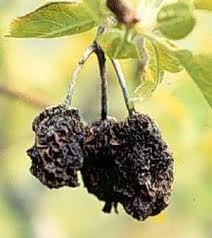
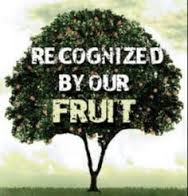
fruitbad fruit

Look at the two trees. Which tree would you rather take the fruit from? The one on the left or the one on the right?

There is an obvious difference between the two. The tree on the left has vibrant fruit, but the plant on the left has really rotten, unidentifiable fruit. Just by the looks of these two fruit-bearers, we would rather take the products from the tree on the left and disregard anything with the tree on the right.

Jesus tells us that good trees cannot bear bad fruit and bad trees cannot bear good fruit. However, he was not talking about literal trees of fruit. Rather, he was speculating about the character of a person.

Jesus is warning us that we must be aware of false prophets. As Jesus said, false prophets come in sheepskins but are ferocious as wolves, he meant that they look like ordinary teachers; however, they do not have the same intentions. Some teachers only say what the people want to hear, claiming it’s God’s message. These people are motivated by fame, money, and power.

Since every good preacher cannot bears bad news and every bad teacher cannot bears good news, it is our job to differentiate between the two.  We should evaluate teachers’ words by examining their lives. Since trees are consistent in the kind of fruit they produce, teachers are the same. Jesus created this metaphor to teach and warn us about the lessons all around us.

Good teachers consistently exhibit good behavior and high moral character as they attempt to live out the Gospel and the Sermon on the Mount. On the other hand, bad teachers give false lessons, do not try to live out the Gospel, and have a lower character.

This does not mean we should be constantly judging others and going on rampages to kick out teachers in the church. Everyone sins. But, we are to examine the motives of the teachers and the results they are seeking.

As Dunkerpunks, our teachings should be focused on leading a countercultural life of pacifism and love. We should focus on the teachings in the Sermon on the Mount. We should be truthful in our speech. We should put an emphasis on our actions.

Jesus also tells us in the scripture that he is more concerned with we do than with what we say. He wants us to do right, rather than speak the right words. Also, our actions should match our speech.

Therefore, we should be wary of teachers whose actions do not match their speech. Bear good fruit through righteous actions and speech. Live by the Sermon on the Mount. Be recognized by the good fruit in your life. 

end of fruit


Jenna Walmer - Palmyra COB, Altantic Northeast District

Jenna Walmer is from Lancaster County and is currently in 12th grade. In school, she loves to research historical events. If she were to live in a specific time period, she would want to be a hippie and live in the 60s or 70s. Her favorite past times are swimming and playing her trombone. If you want to know more about her random life, follow her on twitter: @jaymarie2100


1000+ Letters for Nigeria Day 167

Learn more about the 1000+ Letters for Nigeria Project! 

Today’s letters go to:

National Council of Women’s Organizations
National Council of Churches of Christ in the USA
Bahais of the United States

Click the pictures to read the letters:

Get Involved!

Contribute to the project!

Send non-monetary donations (stamps and envelopes) to:
Emmett Eldred
Carnegie Mellon University
SMC #2046
Pittsburgh, PA 15289

Sign up to write your own letters!

Contribute directly to the Nigeria Crisis Fund

Have a project of your own?

We want to know about it! This is your movement, and we’re here to help you express your Radical, nonconformist approach to following Jesus!

Please fill out a Dunker Punks Profile and email dunkerpunks2014@gmail.com about your vision!

1000+ Letters for Nigeria Day 166

Learn more about the 1000+ Letters for Nigeria Project! 

Today’s letters go to:

Get Involved!

Contribute to the project!

Send non-monetary donations (stamps and envelopes) to:
Emmett Eldred
Carnegie Mellon University
SMC #2046
Pittsburgh, PA 15289

Sign up to write your own letters!

Contribute directly to the Nigeria Crisis Fund

Have a project of your own?

We want to know about it! This is your movement, and we’re here to help you express your Radical, nonconformist approach to following Jesus!

Please fill out a Dunker Punks Profile and email dunkerpunks2014@gmail.com about your vision!

What Global Divestment Day Has To Do With Nonviolence

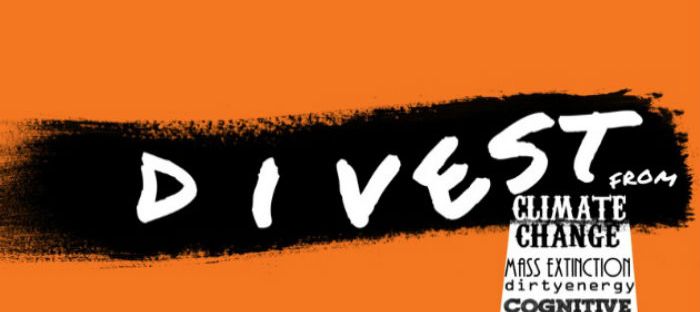
Today is Global Divestment Day, when organizations and activists all over the world shed light on how invested capital (especially the invested capital of organizations with large endowments like universities) fuels the industries that do the most damage to the Earth and environment through activities that fuel climate change.

The idea of divestment is nothing new. Basically, its the idea that investments have a lot to do with the success and failure of large industries, so investors should reward socially responsible companies by investing in them, and compel socially irresponsible companies to change their practices by divesting (un-investing) in them.

If investors invest in a dangerous or destructive industry (for instance, the oil industry) then that industry will have the resources to continue operating and damaging the environment. Conversely, if many large investors divest (remove their invested money) from these industries, then they wont have the resources to continue operating.

It should come as no surprise that in Capitalism, capital is the key to success.

As Christians and as Dunker Punks we have an undeniable, irrefutable call to nonviolence. In the Sermon on the Mount, Jesus says clearly:

43 “You have heard that it was said, ‘You shall love your neighbor and hate your enemy.’ 44 But I say to you, Love your enemies and pray for those who persecute you, 45 so that you may be children of your Father in heaven; for he makes his sun rise on the evil and on the good, and sends rain on the righteous and on the unrighteous. 46 For if you love those who love you, what reward do you have? Do not even the tax collectors do the same? 47 And if you greet only your brothers and sisters, what more are you doing than others? Do not even the Gentiles do the same? 48 Be perfect, therefore, as your heavenly Father is perfect” – Matthew 5: 43-48

So what does this have to do with divestment? What does nonviolence have to do with divestment?

Here’s what I think: If Jesus commands us to love our enemies, to take active steps to show them kindness, good grace, and love, and to refrain from hurting them, what does that mean for those who aren’t our enemies but we don’t often really think of as our neighbors? How should we treat someone in Bangladesh or New Orleans that we don’t know and never will know?

Here’s a bit of common sense for you: If Christ says we should love our enemies, that should automatically mean we love everyone else. Everyone, from Bangladesh, to New Orleans, to Syria is our neighbor. In Luke, Jesus explains how to love:

“Love your enemies, do good to those who hate you,28 bless those who curse you, pray for those who abuse you. 29 If anyone strikes you on the cheek, offer the other also; and from anyone who takes away your coat do not withhold even your shirt. 30 Give to everyone who begs from you; and if anyone takes away your goods, do not ask for them again. 31 Do to others as you would have them do to you.” – Luke 6:27-36

When Jesus says “do good to those who hate you” and “do to others what you would have them do to you,” he’s commissioning a structural, preemptive approach to nonviolence. He’s saying treat people well even before as situation has turned violent. It’s not enough to avoid retaliation. You have to dismantle hatred with love before it is allowed to reach violence (of course, if it does reach violence you have to continue with nonviolence). Nonviolence is not simply not being violent, it is altering structures and behaviors that are in-and-of-themselves violent.

In other words, its not enough to avoid hurting people directly. If you are part of a structure, system, or behavior that hurts people, you are being violent. That’s what the Christian call to nonviolence should be most concerned with: altering structures, systems, and behaviors that are violent.

This is where it comes back to divestment. Divestment is one way to look at our economic structure (capitalism) and alter it to be less violent.

The Global Humanitarian Forum and other think tanks estimate that 300,000 people die each year already from events and effects associated with climate change, with the possibility of as many as 500,000 per year by 2030.

More conservative estimates, like those from the World Health Organization place current deaths at about 150,000 per year and estimate that by 2030, the number will be about 400,000 a year.

So right now, by the most conservative estimates, more people die each year than belong to the Church of the Brethren in the United States. This isn’t just a question of maybe people will die in the future because of climate change, but people are already dying right now. And, there are things we can do to curb this that we don’t. To me, that is every bit as violent as war or terrorism or gun violence.

We cannot call ourselves nonviolent if we do nothing to resist climate change.

That’s why divestment is an act of nonviolence. It’s taking steps to change systems and structures and behaviors that right now are violent. So as nonviolent Christians I think divestment is a great way to practice nonviolent social change. It’s not just about resisting the urge to retaliate against our enemies, its much more that that.

So Dunker Punks, encourage the systems that you’re a part of to divest! If your parents have investments that profit from climate change or environmental destruction, challenge that. If you’re in college, organize your classmates to pressure your schools to divest. If you’re an adult and you belong to a trust or retirement plan or you have your own investments that profit from climate change, make the tough decision to divest from that. If you reflect on the teachings of Jesus, ask yourself where your own financial wellbeing ranks next to the call for radical nonviolence.

Encourage the Church of the Brethren and Brethren Benefit Trust to advance and make good on its commitment to socially responsible investing by adopting more restrictive language about investing in companies that profit from climate change. The current guiding langue says that the BBT will avoid investing in, “Companies that are egregious or consistent violators of environmental regulations” (Sec. 1, Subsec. H, Item d). This is good, and I want to make it very clear that I am very proud of how the COB and BBT show leadership with socially responsible investing, but I don’t think our Christian understanding of climate change should be dependent on the US Government’s definition and regulations. If the US Government isn’t doing enough to combat climate change, certainly a historic peace church can show a better effort.

Continue to lovingly help the members of our faith community recognize and understand the scientific reality that humans cause climate change and have the ability to change their behavior to stop climate change. More importantly, help them understand how fighting Climate Change through divestment and other measures relates to nonviolence. This isn’t just an issue of following scientific consensus, this is an issue of following Christ. This isn’t just about protecting the environment, this is about protecting people. It’s an issue of life.

I hope that the Church of the Brethren becomes a leader in mobilizing nonviolent action to combat climate change. This is a topic that should be at the very center of who we are as a denomination and nonviolent faith tradition right now. In 1935, when the continued threat of worldwide violent conflict was the greatest threat of violence in the world, Annual Conference declared “All War is Sin.”

Now, 80 years later, the greatest, most violent threat facing the world isn’t global conflict, isn’t war, isn’t terrorism, but is climate change. It’s time to say, “Climate Change is Sin.”
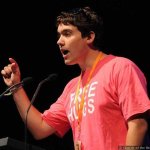

Emmett Eldred - Hollidaysburg COB, Middle PA DistrictEmmett Eldred is a sophomore Creative Writing; Professional Writing; and Ethics, History, and Public Policy Major at Carnegie Mellon University. His passions include reading about, writing about, and snuggling with pugs. Emmett is the founder of DunkerPunks.com, and he wants lots more people to contribute! Fill out a Dunker Punks profile, and join the conversation! Follow Emmett on twitter @emmetteldred and follow Dunker Punks on Twitter @DunkerPunks and on Facebook.

Want to contribute? Fill out a Dunker Punks profile, and/or email dunkerpunks2014@gmail.com.

1000+ Letters for Nigeria Day 165

Learn more about the 1000+ Letters for Nigeria Project! 

Today’s letters go to:

International Youth Foundation
Metropolitan Community Church
Muslim Women’s Coalition

Click the pictures to read the letters!

Get Involved!

Contribute to the project!

Send non-monetary donations (stamps and envelopes) to:
Emmett Eldred
Carnegie Mellon University
SMC #2046
Pittsburgh, PA 15289

Sign up to write your own letters!

Contribute directly to the Nigeria Crisis Fund

Have a project of your own?

We want to know about it! This is your movement, and we’re here to help you express your Radical, nonconformist approach to following Jesus!

Please fill out a Dunker Punks Profile and email dunkerpunks2014@gmail.com about your vision!

1000+ Letters for Nigeria Day 164

Learn more about the 1000+ Letters for Nigeria Project! 

Today’s letters go to:

Evangelical Lutheran Church of America
Family Care International
FeelGood

Click the pictures to read the letters!

Get Involved!

Contribute to the project!

Send non-monetary donations (stamps and envelopes) to:
Emmett Eldred
Carnegie Mellon University
SMC #2046
Pittsburgh, PA 15289

Sign up to write your own letters!

Contribute directly to the Nigeria Crisis Fund

Have a project of your own?

We want to know about it! This is your movement, and we’re here to help you express your Radical, nonconformist approach to following Jesus!

Please fill out a Dunker Punks Profile and email dunkerpunks2014@gmail.com about your vision!

1000+ Letters for Nigeria Day 163

Learn more about the 1000+ Letters for Nigeria Project! 

Today’s letters go to:

Disciples of Christ
Episcopal Church
Equality Now

Get Involved!

Contribute to the project!

Send non-monetary donations (stamps and envelopes) to:
Emmett Eldred
Carnegie Mellon University
SMC #2046
Pittsburgh, PA 15289

Sign up to write your own letters!

Contribute directly to the Nigeria Crisis Fund

Have a project of your own?

We want to know about it! This is your movement, and we’re here to help you express your Radical, nonconformist approach to following Jesus!

Please fill out a Dunker Punks Profile and email dunkerpunks2014@gmail.com about your vision!

1000+ Letters for Nigeria Day 162

Learn more about the 1000+ Letters for Nigeria Project! 

Today’s letters go to:

The Conrad Hilton Foundation
Cordoba Initiative
Council for a Parliament of the World Religions

Click the pictures to read the letters!

Get Involved!

Contribute to the project!

Send non-monetary donations (stamps and envelopes) to:
Emmett Eldred
Carnegie Mellon University
SMC #2046
Pittsburgh, PA 15289

Sign up to write your own letters!

Contribute directly to the Nigeria Crisis Fund

Have a project of your own?

We want to know about it! This is your movement, and we’re here to help you express your Radical, nonconformist approach to following Jesus!

Please fill out a Dunker Punks Profile and email dunkerpunks2014@gmail.com about your vision!